Back to the Beginning: A Reading in Moab

Long ago when I graduated from college, I ended up in Moab, Utah. It was here that I truly fell under the spell of rocks. For the next nine years, I hiked, biked, canoed, backpacked, and explored the red rock country of southern Utah. It was a geologist’s paradise with few of those pesky green things called trees getting in the way of seeing stone.

Now, for the first time since my book Stories in Stone was published I am going back to Moab. While there, I will give a reading at one of my favorite bookstores, Back of Beyond Books. The sister store to Arches Bookstore, Back of Beyond (or Bob, as I call it) focuses on regional books, with new, used, and antiquarian selections, including first editions of many Edward Abbey books. It will be an honor and pleasure to talk about how my time in Moab led me down the path to focus on the cultural and natural history of building stone.
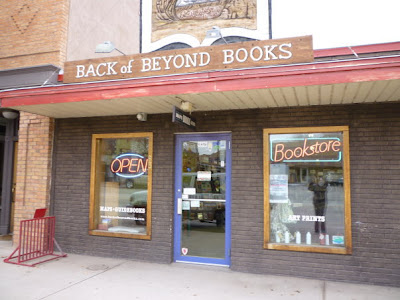

The reading will be at 7:00 P.M. on Thursday, September 9. It should be a fun time!

Fossils in our Nation’s Capital

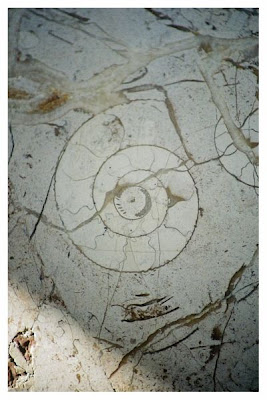
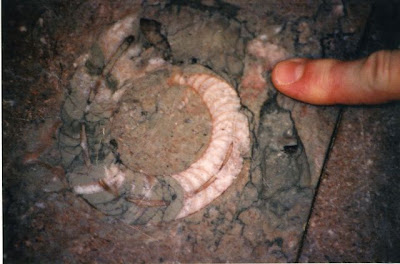
No, the title doesn’t refer to the ancient beasts roaming the halls of Congress though I do wish some of them would go the way of dinosaurs. Instead, I want to highlight a web site I just learned about. It is Fossils in the Architecture of Washington, DC: A Guide to Washington’s Accidental Museum of Paleontology. The site has been put together by Christopher Barr, a lawyer who has lived in DC since 1979. As the name implies, the site’s goal is “to describe, or at least list, all of the public fossils occurring in Washington’s architectural landscape.”

Barr has done a first rate job of assembling a thorough list of the fossil-rich buildings throughout the capital. For each building, he provides an introduction on what you can see, where to see it, and a history of the building. In some cases, he also speculates why a particular stone was chosen. He then provides photos (with helpful scales) of the fossils, which he describes in detail, providing geologic background. Finally, he documents who helped him and where one can obtain more background information. Nowhere else have I found such a well-put-together site about urban fossils.

Urban fossils are amazing resources and offer an excellent way to get people interested in fossils, deep time, evolution, and geology in general. Plus, as Barr has done, these fossils are a great way to get people to think about human history. He does list a many of the guides that are available but it is such a small list considering the wonderful fossils found in the urban environment. I hope that Barr’s site can inspire other urban paleontologists to do the same thing in their cities.